01
Prepping the base for clay
We shape and pack the base over Leon County's red clay so the slab distributes its weight evenly and stays put once a load arrives, even while that ground soaks up water and dries out again.
A pad scaled to whatever rests on it and built for the ground beneath: reinforced with structural fiber and welded wire mesh for the load, and drained so the red clay and the summer storms leave it be.
Credibility comes from how it's built, not from promises. Here's the order of operations on every concrete pads & slabs job.
We shape and pack the base over Leon County's red clay so the slab distributes its weight evenly and stays put once a load arrives, even while that ground soaks up water and dries out again.
Slab depth answers to whatever rides on top. A shed pad and a shop floor rated for vehicles are not anywhere near the same pour.
Most pads get structural fiber and welded wire mesh, the Panhandle flatwork standard. We move up to a steel rebar grid only for genuinely heavy or structural loads, the work rebar exists to do, not light residential pads.
For enclosed or heated slabs we lay a vapor barrier against rising ground moisture, and we shape the surrounding grade so storm water runs off instead of soaking into the base and the clay under it.
We place the mix, saw the control joints, and cure with Panhandle heat and humidity accounted for so the slab firms up evenly edge to edge.
Most contractors vanish after the deposit. We pick up the phone, show up when we say, and stand behind the work after the truck leaves. The follow-through is the difference.
A foreman we know runs your job and a vetted crew does the work, managed by Lucky's, one company accountable from the first call to the final walkthrough.
COI and lien waivers on file before we break ground. The documentation that lets commercial clients pay and gives homeowners peace of mind.
Prepped subgrade, reinforced and mixed to spec for the job, and proper curing. We build credibility through the process, not promises. On concrete pads & slabs, that starts with prepping the base for clay.
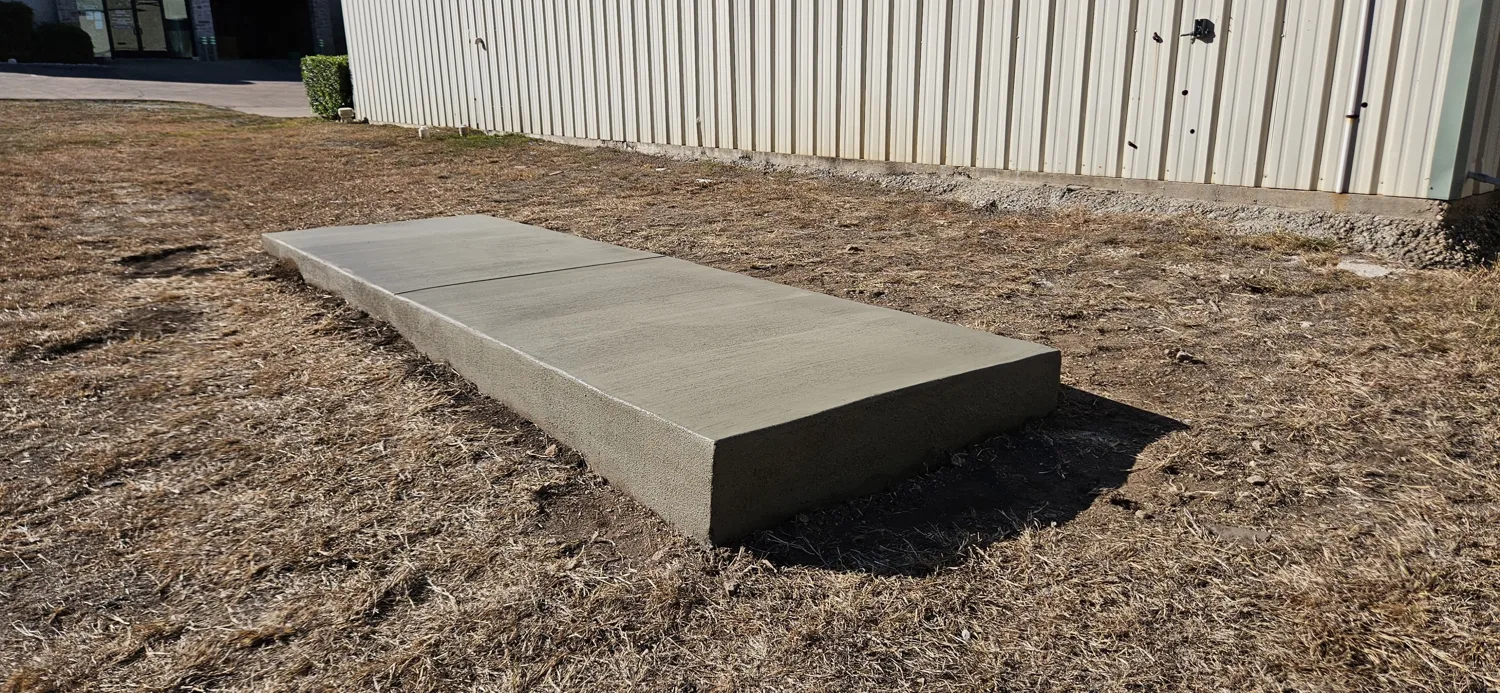
Pads and slabs price against the load and the ground: reinforcement geared to the use, a packed base made for the red clay, and a grade that sheds water. For an opening band, most pads and slabs fall near $7 to $13 per square foot, depending on thickness and whether a vapor barrier is called for. We scale and price it to the load that pad will bear.
For most residential pads we run structural fiber through the mix with welded wire mesh across the slab, the Panhandle flatwork standard. For genuinely heavy or structural loads, a shop floor taking trucks, say, we step up to a steel rebar grid, since that is the work rebar exists for. We gear the reinforcement to the real load rather than burdening light pads with steel they have no use for.
It follows the load. A shed pad is a sliver of the weight a garage or shop floor carrying vehicles and gear has to bear, so we gear thickness and reinforcement to your actual use and allow for the red clay working beneath it.
Yes. Those are heavy, concentrated loads, so we build up the thickness and the reinforcement, stepping to rebar where the load genuinely warrants it. A hot tub also wants a level base that holds steady as the clay wets and dries, which puts drainage on equal footing with the steel. Tell us what is going on it and we build the pad around that.
For enclosed or heated slabs, usually yes, since ground moisture and the damp Tallahassee air push water up through concrete. We base that call on the slab's purpose.
Some do, hinging on size, placement, and use, and the rules differ across Leon County and the jurisdictions around it. We flag when a permit is likely so it is handled up front rather than surfacing later.
You'll hear back from a real person, usually the same day. No call center, no runaround, no chasing us down.
Booking up fast this season. Or call (850) 600-4359